
من العيّنة إلى التقرير: التتبّع الكامل ولماذا هو أساس الثقةFrom specimen to report: full traceability and why it is the basis of trust
أكثر أخطاء المختبر خطراً لا تحدث في الجهاز. تحدث قبله وبعده: أنبوب باسم مكتوب باليد، عيّنة وصلت متأخرة ولم يلحظ أحد، نتيجة نُسبت إلى المريض الخطأ، تقرير عُدّل ولم يعرف الطبيب. التتبّع الكامل هو الطريقة الوحيدة المعروفة لإغلاق هذه الفجوات، وهذا المقال يشرح كيف يُبنى خطوة خطوة في مختبر سوري عادي.The most dangerous laboratory errors do not happen inside the analyser. They happen before and after it: a tube with a handwritten name, a specimen that arrived late and nobody noticed, a result attributed to the wrong patient, a report amended without the doctor knowing. Full traceability is the only known way to close those gaps, and this article explains how it is built step by step in an ordinary Syrian laboratory.
أبرز النقاطKey takeaways
- أكثر من ثلثي أخطاء المختبر تقع في المرحلة قبل التحليلية، وأغلبها أخطاء هوية وتوقيت.More than two thirds of laboratory errors fall in the pre-analytical phase, and most are errors of identity and timing.
- التتبّع يعني معرّفاً فريداً، وسجلاً لكل انتقال، ونتيجة مربوطة بالجهاز والمشغّل ودفعة الكاشف.Traceability means a unique identifier, a record of every move, and a result tied to the analyser, the operator and the reagent lot.
- التعديل بعد الاعتماد جزء من التتبّع: يُسجَّل بسبب، وتبقى النسخة الأولى، ويُبلَّغ من استلم النسخة القديمة.Amendment after signing is part of traceability: recorded with a reason, the first version kept, and whoever received the old copy told.
أين تقع الأخطاء فعلاً؟Where errors actually happen
الدراسات المنشورة في طب المختبر تتفق منذ عقدين على شيء واحد: الجهاز نادراً ما يكون المشكلة. المرحلة قبل التحليلية، من طلب الفحص إلى وصول العيّنة إلى الجهاز، تحمل الحصة الأكبر من الأخطاء، والمرحلة بعد التحليلية، من النتيجة إلى التقرير إلى الطبيب، تحمل حصة مهمة أخرى. وأغلب هذه الأخطاء أخطاء هوية: اسم على أنبوب لا يطابق الطلب، عيّنتان لمريضين تبادلتا مكانهما، نتيجة دُوّنت في الملف الخطأ.Published studies in laboratory medicine have agreed on one thing for two decades: the analyser is rarely the problem. The pre-analytical phase, from the test request to the specimen reaching the analyser, carries the largest share of errors, and the post-analytical phase, from result to report to doctor, carries another important share. Most of those errors are errors of identity: a name on a tube that does not match the request, two patients' specimens swapped, a result written into the wrong file.
التتبّع الكامل هو الجواب الهندسي على هذه الحقيقة. بدل الاعتماد على انتباه كل شخص في كل خطوة، يُبنى المسار بحيث تحمل العيّنة هويتها معها، ويكتب كل انتقال نفسه، وتُربط كل نتيجة بما أنتجها.Full traceability is the engineering answer to that fact. Instead of relying on everyone's attention at every step, the path is built so that the specimen carries its identity with it, every move writes itself, and every result is tied to what produced it.
الخطوة الأولى: معرّف لا يتكررStep one: an identifier that never repeats
كل أنبوب يحتاج إلى معرّف فريد يُطبع على ملصق لحظة التسجيل، بشريط رمزي يقرؤه الماسح ورمز صغير يقرؤه الهاتف. رقم القيد وحده لا يكفي حين يكون للزيارة الواحدة ثلاثة أنابيب، والاسم لا يكفي أبداً. وحين يعمل المختبر مع مختبرات أخرى، يجب أن يحمل المعرّف رمز المختبر المُصدِر، فلا تلتقي عيّنتان من مختبرين بالرقم نفسه على طاولة المختبر المرجعي.Every tube needs a unique identifier printed on a label at the moment of registration, with a barcode a scanner reads and a small code a phone reads. The accession number alone is not enough when one visit has three tubes, and a name is never enough. When the laboratory works with others, the identifier must carry the issuing laboratory's code, so two specimens from two laboratories never meet on the reference laboratory's bench under the same number.
قاعدة عملية: الملصق يُطبع مع الإيصال، في اللحظة نفسها، من النظام نفسه. الملصق الذي يُكتب باليد بعد دقيقتين هو أول حلقة مكسورة في السلسلة.A practical rule: the label prints with the receipt, at the same moment, from the same system. The label written by hand two minutes later is the first broken link in the chain.
الخطوة الثانية: سلسلة العهدةStep two: the custody chain
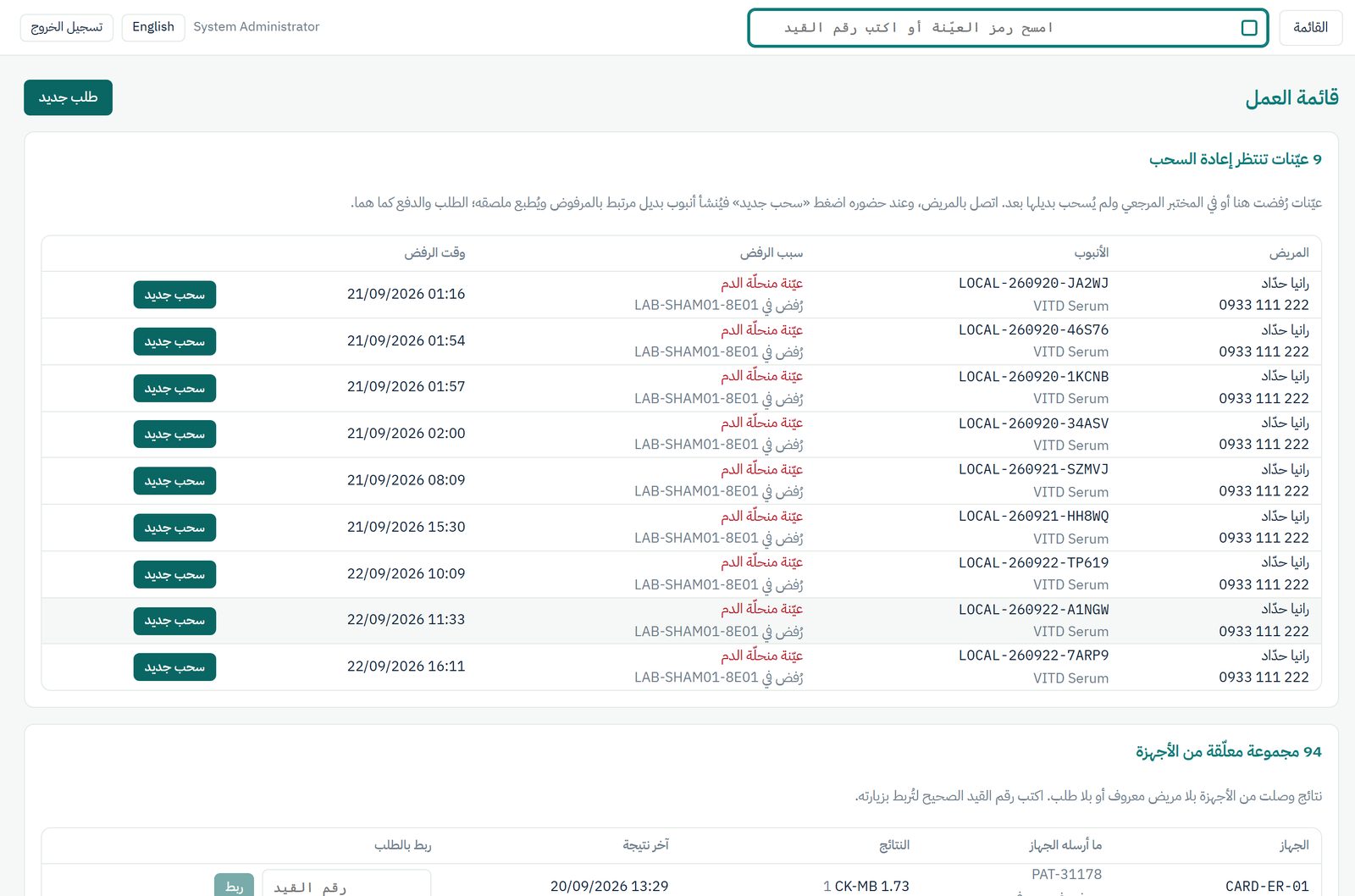
سلسلة العهدة هي سجل بكل انتقال للعيّنة: سُحبت، لُصقت، أُرسلت، في الطريق، استُلمت، قُبلت، في التحليل، صدرت نتيجتها، أُبلغت. كل حلقة تحمل الوقت والشخص والمكان، ولا يمكن حذف حلقة أو تعديلها بعد كتابتها. حين يُرفض أنبوب قبل التحليل، لأنه منحل أو متخثر أو ناقص أو في الأنبوب الخطأ، يُسجَّل الرفض بسبب من قائمة معتمدة، فتُعرف نسبة الرفض وأسبابها آخر الشهر، ويُبلَّغ الطبيب أو المريض أن عيّنة جديدة مطلوبة.The custody chain is a record of every move of the specimen: collected, labelled, dispatched, in transit, received, accepted, in analysis, resulted, reported. Every link carries the time, the person and the place, and no link can be deleted or altered once written. When a tube is rejected before analysis, because it is haemolysed, clotted, short or in the wrong container, the rejection is recorded with a reason from a standard list, so the rejection rate and its causes are known at the end of the month, and the doctor or patient is told a new specimen is needed.
في المختبر الواحد تكفي سلسلة داخلية. في شبكة من المختبرات تمتد السلسلة عبر الناقل: كشف إرسال مختوم برقم ودرجة حرارة، ومسح عند الاستلام والتسليم من هاتف الناقل، واستلام في المختبر المرجعي يُغلق الحلقة. العيّنة التي لم تصل تُعرف في اليوم نفسه، لا حين يتصل المريض يسأل عن نتيجته.Within one laboratory an internal chain is enough. In a network of laboratories the chain extends through the courier: a manifest sealed with a number and a temperature, a scan at pickup and delivery from the courier's phone, and receipt at the reference laboratory that closes the link. The specimen that never arrived is known the same day, not when the patient calls to ask about a result.
الخطوة الثالثة: النتيجة وما أنتجهاStep three: the result and what produced it
النتيجة الجيدة تحمل معها أربعة أشياء: الجهاز الذي أنتجها، والمشغّل الذي كان على الجهاز، ودفعة الكاشف التي استُعملت، وحالة ضبط الجودة ذلك اليوم. حين تصل النتيجة من الجهاز مباشرة إلى ملف المريض مطابقةً برمز الأنبوب، تُكتب هذه الأربعة تلقائياً. وحين تُدخل باليد، يكتب النظام من أدخلها ومتى. الفرق يظهر بعد شهر، حين يُكتشف أن دفعة كاشف معيّنة كانت معيبة: المختبر الذي يتتبّع يعرف بالضبط أي نتائج تأثرت ويستدعيها، والمختبر الذي لا يتتبّع يستدعي كل شيء أو لا شيء.A good result carries four things with it: the analyser that produced it, the operator who was on the analyser, the reagent lot that was used, and the state of quality control that day. When the result comes from the analyser straight into the patient's file, matched by the tube's barcode, those four are written automatically. When it is entered by hand, the system writes who entered it and when. The difference shows a month later, when a particular reagent lot turns out to be faulty: the laboratory that traces knows exactly which results were affected and recalls them, and the laboratory that does not recalls everything or nothing.
الخطوة الرابعة: التوقيع والتعديلStep four: the signature and the amendment
التقرير المعتمد يحمل اسم من اعتمده ووقته. والتعديل بعده أمر طبيعي، فالمختبرات الجيدة تعدّل حين تكتشف خطأ، شرط ألا يكون التعديل صامتاً. التتبّع يطلب أن يُسجَّل التعديل بسبب، وأن تبقى النسخة الأولى محفوظة، وأن تقول النسخة الجديدة إنها معدَّلة، وأن يعرف من استلم النسخة القديمة أن هناك نسخة أحدث. الرمز الذي يحمله كل تقرير للتحقق من النسخة يقوم بالجزء الأخير وحده: من يمسح رمز نسخة قديمة يقرأ أنها ليست النسخة الحالية.The signed report carries the name of who signed it and the time. Amendment afterwards is normal; good laboratories amend when they find an error, as long as the amendment is never silent. Traceability asks that the amendment be recorded with a reason, that the first version stay on file, that the new copy say it is amended, and that whoever received the old copy learn there is a newer one. The check code every report carries does the last part by itself: whoever scans an old copy's code reads that it is not the current version.
ماذا تكسب من ذلك؟What you gain
المختبر الذي يتتبّعThe laboratory that traces
- يجيب طبيباً غاضباً في دقيقة، بسجل لا برأي.Answers an angry doctor in a minute, with a record rather than an opinion.
- يعرف نسبة رفض العيّنات وأسبابها ويصلحها من مصدرها: تدريب سحب، أو أنابيب أفضل، أو نقل أسرع.Knows its specimen rejection rate and causes and fixes them at the source: collection training, better tubes, faster transport.
- يستدعي النتائج المتأثرة بدفعة كاشف معيبة بالاسم، لا بالتخمين.Recalls the results affected by a faulty reagent lot by name, not by guesswork.
- يمرّ بالتفتيش بسجلاته اليومية نفسها، من غير أن يكتب شيئاً قبله بأسبوع.Passes inspection on its own daily records, without writing anything the week before.
في نظام المختبر من لاب سوريا تُبنى هذه الخطوات الأربع في مسار العمل نفسه: الملصق مع الإيصال، وسلسلة العهدة مع كل مسح، والنتيجة مع جهازها ومشغّلها ودفعتها، والتعديل مع سببه ونسخته الأولى ورمز التحقق. الفريق لا يفعل شيئاً إضافياً؛ يعمل عمله، والسلسلة تُكتب وهو يعمل.In the LabSyria laboratory system these four steps are built into the workflow itself: the label with the receipt, the custody chain with every scan, the result with its analyser, operator and lot, and the amendment with its reason, its first version and its check code. The team does nothing extra; it does its work, and the chain writes itself as it works.
المراجعReferences
- Plebani M. The detection and prevention of errors in laboratory medicine. Annals of Clinical Biochemistry. 2010;47(2):101-110. DOI.
- World Health Organization. Laboratory quality management system: handbook. 2011. WHO.
- International Organization for Standardization. ISO 15189:2022 Medical laboratories: requirements for quality and competence. ISO.
روابط لجهاتٍ ومعايير عالمية موثوقة. المحتوى تعليميٌّ عام ولا يغني عن الإجراءات المعتمدة في مختبرك.Links to authoritative international bodies and standards. This content is general education and does not replace your laboratory’s validated procedures.
للمزيدKeep reading
تعلّم هذا الموضوع بعمق في أكاديمية لاب سوريا المجانية.Learn this in depth in the free LabSyria academy.
إلى الأكاديميةGo to the academy