
ما بعد الجهاز: كيف تُحكَم التحاليل التي تُجرى خارج المختبرBeyond the device: governing the tests done outside the laboratory
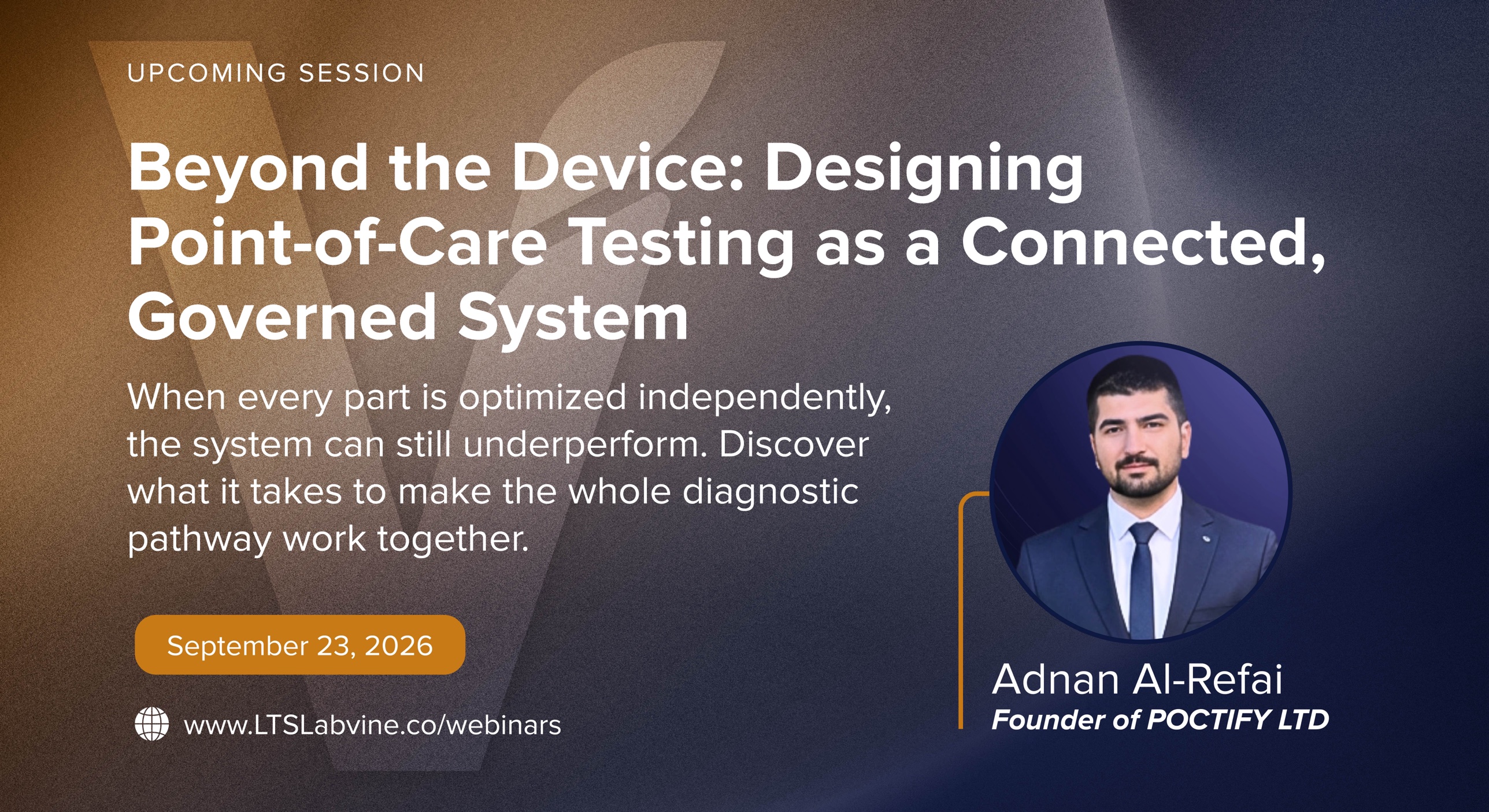
جهاز السكر في الصيدلية، وجهاز HbA1c في العيادة، والاختبار السريع في قسم الإسعاف، كلها تعطي نتيجة خلال دقائق. لكن السرعة وحدها لا تجعل النتيجة موثوقة ولا تجعلها تصل إلى من يحتاجها. هذا المقال مبني على محاضرة قدّمها عدنان الرفاعي في جلسة LabVine في 23 أيلول 2026، ويعرض الأسس الخمسة التي تحكم أي تحليل يُجرى قرب المريض، مع ما يعنيه ذلك للمختبر والعيادة والصيدلية في سوريا.A glucose meter in a pharmacy, an HbA1c analyser in a clinic, a rapid test in an emergency room: each gives a result within minutes. Speed alone does not make that result trustworthy, and it does not make it reach the person who needs it. This article is based on a talk Adnan Alrefai gave at a LabVine session on 23 September 2026. It sets out the five foundations that govern any test done near the patient, and what they mean for laboratories, clinics and pharmacies in Syria.
أبرز النقاطKey takeaways
- نقل الجهاز إلى جانب المريض حلٌّ موضعي، أما النتيجة فهي حصيلة نظام كامل.Moving a device next to the patient is a local fix. The result is the outcome of a whole system.
- خمسة أسس تحكم التحليل خارج المختبر: المسؤولية، والكوادر، والجودة، ووصول النتيجة إلى السجل، والإشراف.Five foundations govern testing outside the laboratory: ownership, people, quality, the route into the record, and oversight.
- صمّم النظام أولاً ثم اختر الجهاز، وقِس الخدمة لا زمن النتيجة وحده.Design the system first, then choose the device, and measure the service as well as the time to result.
الفكرة في جملتينThe idea in two sentences
عندما يتأخر المختبر في إصدار النتائج، يكون الحل الأسهل شراء جهاز صغير ووضعه حيث يوجد المريض. تصبح النتيجة جاهزة خلال تسعين ثانية بدل ساعة ونصف، ويبدو أن المشكلة حُلّت. بعد أشهر يتبيّن أن المسار كله لم يتسارع كما وُعد: النتيجة بقيت على شاشة الجهاز حتى نسخها أحدهم بيده، والطبيب أعاد التحليل في المختبر لأنه لم يرَ الأولى، ولم يكن واضحاً من المسؤول عن التصرف بها.When a laboratory is slow to release results, the easiest fix is to buy a small device and put it where the patient is. The result is ready in ninety seconds instead of ninety minutes, and the problem looks solved. Months later it turns out the pathway as a whole has not sped up as promised: the result stayed on the device screen until someone copied it by hand, the doctor repeated the test in the laboratory because the first one was never seen, and nobody was sure who was meant to act on it.
هذا ما سمّته سلسلة LabVine «مغالطة عنق الزجاجة»: تصلح جزءاً من النظام فينتقل الاختناق إلى مكان آخر. الاختناق في هذه الحالة انتقل من طاولة المختبر إلى كل ما يحيط بالجهاز.This is what the LabVine series called the bottleneck fallacy: you fix one part of a system and the constraint moves somewhere else. Here it moved from the laboratory bench to everything around the device.
الجهاز فعل تماماً ما اشتُري من أجله. الذي لم يُصمَّم هو النظام الذي حوله.The device did exactly what it was bought to do. What was never designed was the system around it.
ماذا يحدث عندما يغادر الجهاز المختبر؟What happens when the device leaves the laboratory?
داخل المختبر لا تكاد تلاحظ نظام الجودة لأنه موجود حولك: شخص مدرَّب يمرّر العينة، والكونترول اجتاز صباحاً، ومسؤول قريب يراجع. انقل الجهاز نفسه إلى عيادة أو صيدلية ولن ينتقل معه شيء من ذلك ما لم يُصمَّم عمداً. في التطبيق العملي تظهر خمس مشكلات متكررة:Inside a laboratory you hardly notice the quality system because it surrounds you: a trained person runs the sample, the control passed that morning, and a supervisor is close by to review. Move the same device to a clinic or a pharmacy and none of that travels with it unless it is designed on purpose. In practice five problems appear again and again:
- نتائج لا تصل إلى أي سجل: تُنسخ على ورقة، أو تُصوَّر بالهاتف وتُرسل على واتساب، أو تُكتب على طرف ورقة الوصفة.Results that never reach a record: copied onto paper, photographed and sent on WhatsApp, or written on the corner of a prescription.
- كفاءة تختلف من مكان إلى آخر ومن مناوبة إلى أخرى، بحسب من درّب الموظف ومتى.Competence that varies by site and by shift, depending on who trained the member of staff and when.
- ضبط جودة يتحول إلى طقس ورقي: يُمرَّر الكونترول لأن النموذج يطلبه، ولا ينظر أحد إلى الاتجاه.Quality control that becomes a paper ritual: the control is run because the form asks for it, and nobody looks at the trend.
- تحاليل تُعاد في المختبر لأن أحداً لا يثق بنتيجة لا يراها، فيدفع المريض مرتين.Tests repeated in the laboratory because nobody trusts a result they cannot see, so the patient pays twice.
- نتيجة بلا مسؤول: بوتاسيوم حرج في عيادة عند السادسة مساءً، فمن يتصرف؟A result with no owner: a critical potassium in a clinic at six in the evening. Who acts on it?
الأسس الخمسة حول أي جهازThe five foundations around any device
هذه العناوين الخمسة طريقة لترتيب المسؤوليات التي تنص عليها المواصفة ISO 15189:2022، التي صارت تشمل التحاليل قرب المريض. كل عنوان يقابله إجراء عملي يمكن البدء به هذا الأسبوع.These five headings are a way of organising the responsibilities set out in ISO 15189:2022, which now covers testing near the patient. Each one comes with a practical action a service can start this week.
1. المسؤولية: من يملك النتيجة؟1. Ownership: who owns the result?
الجواب المعتاد هو «يعتمد على الحالة»، وهذا ليس حوكمة. الحوكمة تعني اسماً محدداً مسؤولاً عن كل نتيجة، في كل موقع، وفي كل ساعة، مع طريق تصعيد عندما يغيب. الإجراء: اكتب لكل مسار من يتصرف بالنتيجة، وخلال كم من الوقت، ومن يُبلَّغ إن لم يتصرف.The usual answer is "it depends", and that is not governance. Governance means a named person responsible for every result, at every site and every hour, with an escalation route when that person is away. The action: for each pathway, write down who acts on the result, within what time, and who is told if they do not.
2. الكوادر: الكفاءة صفة الشبكة كلها2. People: competence belongs to the whole network
شهادة تدريب قديمة تقول إن الموظف تدرّب مرة، ولا تقول إنه قادر على إجراء التحليل بأمان اليوم. في دراسة منشورة صغيرة رُوقب ثلاثون مشغّلاً لأجهزة السكر كلهم مجدَّد اعتمادهم تلقائياً، فحقق ستة منهم فقط عتبة الثمانين بالمئة في قائمة التحقق. الإجراء: سجل كفاءة واحد لكل المواقع، مربوط بالجهاز، بحيث لا يُسمح لمن انتهت صلاحية تأهيله بالتحليل إلا عبر طريق طوارئ موثّق.An old training certificate says the person was trained once. It does not say they can do the test safely today. In one small published study, thirty glucose meter operators, all automatically recertified, were observed doing the test, and only six met the eighty per cent checklist threshold. The action: one competence register for all sites, tied to the device, so that someone whose authorisation has lapsed cannot test except through a documented emergency route.
3. الجودة: أن تُرى من المختبر، وأن تُغلق الحلقة3. Quality: visible from the laboratory, with the loop closed
يفترض ضبط الجودة الداخلي والتقييم الخارجي أن من يمرّر الكونترول قريب ممن يراجعه. وزّعهما على عشرين موقعاً ويصبحان أوراقاً تصف الماضي. ونصف الجودة الآخر هو ما يحدث بعد الإخفاق: سبب جذري، وإجراء تصحيحي له مسؤول، وتحقّق لاحق من أنه نجح. الإجراء: كل نتيجة كونترول وكل تقييم خارجي وكل إخفاق في مكان واحد، حسب الموقع والجهاز والمشغّل، وسجل واحد لعدم المطابقة يُغلق فعلاً.Internal quality control and external quality assessment assume the person running the control sits near the person reviewing it. Spread them across twenty sites and they become paperwork that describes the past. The other half of quality is what happens after a failure: a root cause, a corrective action with an owner, and a later check that it worked. The action: every control result, external assessment and failure in one place, by site, device and operator, and one nonconformity register that actually gets closed.
4. وصول النتيجة: النتيجة التي ليست في السجل مجرد إشاعة4. The route into the record: a result not in the record is a rumour
في دراسة على العيادات الخارجية اختلفت 3.7 بالمئة من نتائج السكر المُدخلة يدوياً عن قراءة الجهاز نفسه، وكان واحد من كل سبعة منها بعيداً بأكثر من عشرين بالمئة. يجب أن تصل النتيجة إلى سجل المريض الصحيح ومعها مصدرها: أي جهاز، وأي مشغّل، وهل كان الكونترول ساري المفعول. الإجراء: حدّد طريق النتيجة إلى السجل قبل اختيار الجهاز لا بعده.In one outpatient study, 3.7 per cent of glucose results entered by hand disagreed with the reading from the same meter, and one in seven of those was out by more than twenty per cent. The result has to reach the right patient's record together with its provenance: which device, which operator, and whether the control was in date. The action: decide the route into the record before choosing the device, not after.
5. الإشراف: عن بُعد بالتصميم5. Oversight: remote by design
لا يستطيع فريق الجودة أن يكون في كل موقع. لذلك يجب أن يخبره النظام: أي جهاز فاته الكونترول صباحاً، وأي نتيجة حرجة لم يُقرّ باستلامها أحد، وأي موقع تغيّر معدل أخطائه هذا الأسبوع. الفرق هو بين أن تعرف في اليوم نفسه وأن تعرف في التدقيق السنوي.The quality team cannot be at every site. So the system has to tell them which device missed its control this morning, which critical result nobody has acknowledged, and which site's error rate moved this week. The difference is between finding out the same day and finding out at the annual audit.
ماذا يعني هذا في سوريا؟What this means in Syria
التحاليل قرب المريض منتشرة عندنا أكثر مما تُحصى: أجهزة السكر في الصيدليات، والاختبارات السريعة في العيادات، وأجهزة HbA1c والغازات الدموية في المشافي الخاصة. وكثير من النتائج ما زال يُنقل على الورق أو بصورة على الهاتف. ويضاف إلى ذلك انقطاع الكهرباء والإنترنت، مما يجعل أي نظام يعتمد على الاتصال الدائم هشاً.Testing near the patient is more widespread here than anyone counts: glucose meters in pharmacies, rapid tests in clinics, HbA1c and blood gas analysers in private hospitals. Many results still travel on paper or as a photograph on a phone. Add power and internet cuts, and any system that depends on a constant connection becomes fragile.
لهذا يبدأ الحل بما لا يحتاج إلى ميزانية: اسم مسؤول عن كل نتيجة، وسجل كفاءة واحد، وسجل ضبط جودة يقرؤه أحد فعلاً. ثم يأتي الربط، ويُفضَّل أن يعمل دون إنترنت ويحفظ النتائج حتى يعود الاتصال. إذا لم يكن الجهاز قابلاً للربط فأنت تخسر الأتمتة لا الحوكمة: النتيجة اليدوية يمكن أن يكون لها مسؤول وطريق إلى السجل وسجل جودة.That is why the answer starts with what needs no budget: a named owner for every result, one competence register, and a quality control record that someone actually reads. Connectivity comes next, preferably able to work without the internet and hold results until the connection returns. If a device cannot be connected you lose the automation, not the governance: a manual result can still have an owner, a route into the record and a quality record.
صمّم النظام قبل أن تختار الجهازDesign the system before you choose the device
معظم الجهات تبدأ بالجهاز ثم ترجع إلى الخلف. الأفضل أن تبدأ بالقرار ثم تتقدم:Most services start with the device and work backwards. It is better to start with the decision and work forwards:
- سمِّ القرار الذي تغيّره النتيجة ومن يتخذه. إن لم تستطع تسمية قرار فلا حاجة إلى التحليل.Name the decision the result changes and who makes it. If you cannot name a decision, the test is not needed.
- سمِّ المسؤول عن النتيجة في كل موقع وكل ساعة.Name the owner of the result at every site and every hour.
- حدّد طريق النتيجة إلى سجل المريض.Decide the route into the patient record.
- ضع قواعد الكفاءة وضبط الجودة التي سيطبّقها النظام فعلاً.Set the competence and quality control rules the system will actually enforce.
- ثم اختر الجهاز، على أساس أدائه التحليلي وقدرته على تلبية الخطوات الأربع السابقة.Then choose the device, on its analytical performance and its ability to meet the four steps above.
قِس الخدمة لا الجهاز وحدهMeasure the service, not only the device
زمن النتيجة مقياس الجهاز. ضع إلى جانبه أربعة مقاييس للخدمة، لكل منها حدٌّ ومسؤول: الموثوقية (الالتزام بالكونترول والكفاءة حسب الموقع)، والظهور (نسبة النتائج الموجودة في السجل ضمن الوقت الذي يحتاجه المسار)، والتصرف (النتائج الحرجة التي أُقرّ باستلامها وتُصرِّف بها ضمن الوقت المتفق عليه)، والتحسّن (التحاليل المعادة دون تخطيط، والزمن من النتيجة إلى القرار). إن أضفت مقياساً واحداً فليكن الثاني.Time to result is the device's measure. Put four service measures beside it, each with a threshold and an owner: reliable (control and competence compliance by site), visible (the share of results in the record within the time the pathway needs), acted upon (critical results acknowledged and acted on within the agreed time) and improved (unplanned repeat testing, and time from result to decision). If you add only one, add the second.
ثلاثة أسئلة ليوم عاديThree questions for an ordinary day
- إلى أين تذهب نتيجة أُجريت خارج مختبرك بعد أن تظهر على الشاشة؟ تتبّعها بنفسك.Where does a result produced outside your laboratory go after it appears on the screen? Follow it yourself.
- من سيعرف اليوم إن انجرف جهاز في أبعد موقع لديك؟ سمِّ الشخص.Who would know today if a device at your furthest site drifted? Name the person.
- أيّ من حلولك الموضعية الأخيرة نقل عنق الزجاجة بدل أن يزيله؟Which of your recent local fixes moved the bottleneck instead of removing it?
يمكنك مشاهدة المحاضرة كاملة بالإنجليزية على قناة LTS LabVine في يوتيوب، وقراءة نصّها المكتوب مع المراجع على موقع POCTIFY.You can watch the full talk in English on the LTS LabVine YouTube channel and read the written version with references on the POCTIFY site.
المراجعReferences
- Tang Friesner C, Meyer J, Nippak P. Glucose point-of-care meter operators competency: an assessment checklist. Practical Laboratory Medicine. 2020;20:e00157.
- Mays J, Mathias P. Measuring the rate of manual transcription error in outpatient point-of-care testing. Journal of the American Medical Informatics Association. 2019;26(3):269-272.
- ISO 15189:2022. Medical laboratories: requirements for quality and competence. International Organization for Standardization; 2022.
- Alrefai A. Beyond the Device: Designing Point-of-Care Testing as a Connected, Governed System. LabVine Activation Session, 23 September 2026. https://www.youtube.com/watch?v=DWHzZMLYDEw
روابط لجهاتٍ ومعايير عالمية موثوقة. المحتوى تعليميٌّ عام ولا يغني عن الإجراءات المعتمدة في مختبرك.Links to authoritative international bodies and standards. This content is general education and does not replace your laboratory’s validated procedures.
للمزيدKeep reading
تعلّم هذا الموضوع بعمق في أكاديمية لاب سوريا المجانية.Learn this in depth in the free LabSyria academy.
إلى الأكاديميةGo to the academy